

Education Table of Contents - Last Update 27th July 2026
Local Education
-
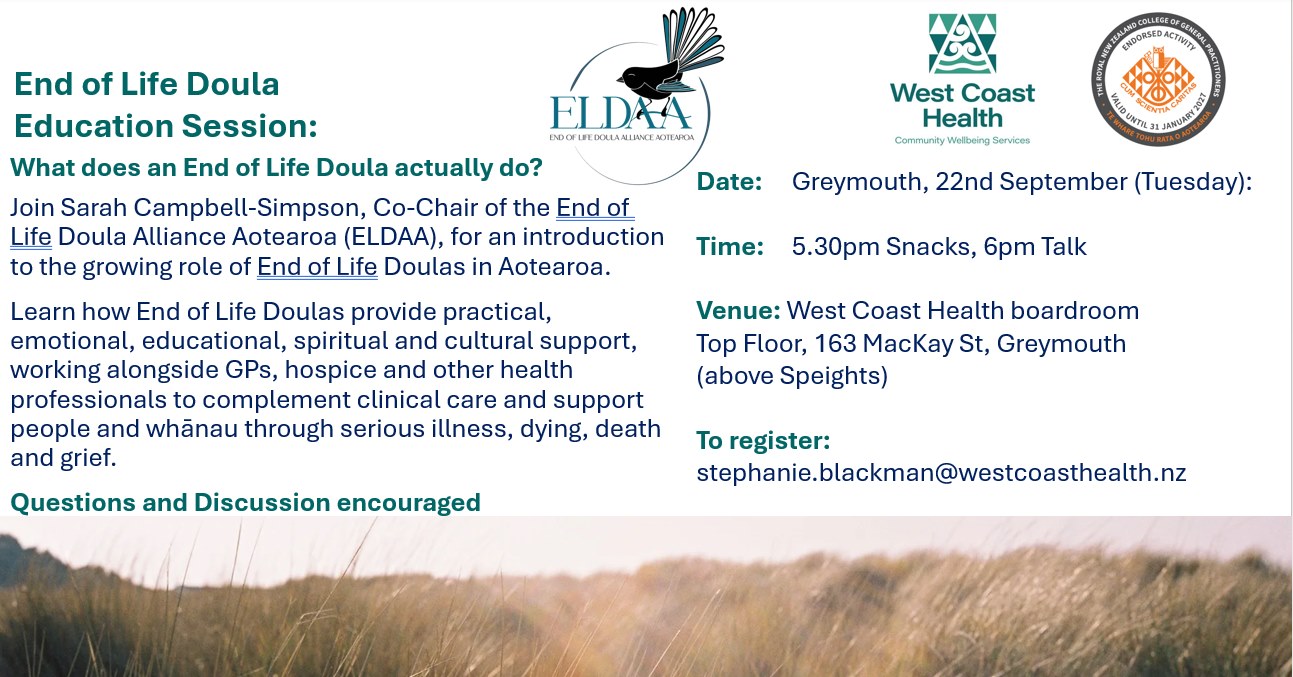
- End of Life Doula 22nd September 6PM, Greymouth
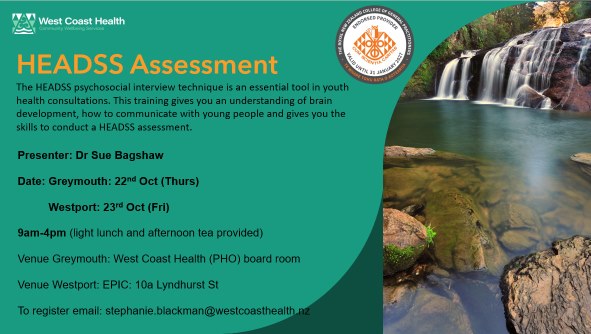
- HEADSS - 22nd & 23rd October 9AM-4PM - Greymouth, Westport
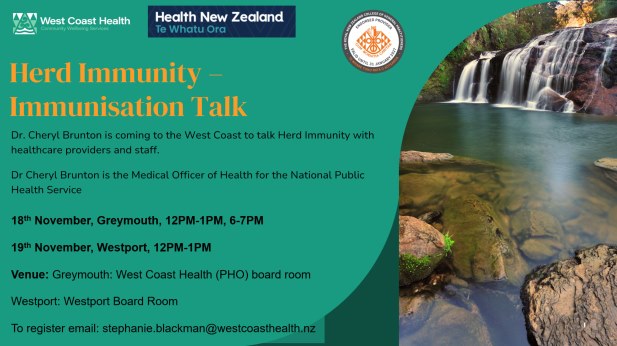
- Herd Immunity - Immunisation Talk - 18th & 19th November, Greymouth & Westport
PHO Orientation Dates
- Next: 20th November 2026
Webinars
September
- Getting compliant with instrument reprocessing in Primary Care: My Health Hub: 15th Sept, 1-2pm
- Sepsis starts here: 15th Sept, Collaborative Aotearoa
- End of Life Doula Education - 21st September, Greymouth
- Goodfellow: Sex, desire and function: Assessment, management and referral - 22nd Sept, 7.30pm
- Unmasking Paediatirc Sepsis: My Health Hub, 23rd Sept: 7-8pm
- Goodfellow: Epilepsy; Consideration for paediatric and female patients: 29th Sept: 7.30pm
October
- Goodfellow: Beyond topicals: Managing moderate-to-severe Atopic dermatitis: 20th Oct, 7.30pm
- High-Control Group Awareness and Practice Skills Workshop - 21st October, Greymouth
Upcoming Conferences
- 2026 PMAANZ Conference 17-19 September - Wellington
- NZNO College of Primary Health Care Nurses Symposium - 9-10th October - Christchurch
West Coast Health Education
West Coast Health Orientation

Upcoming Webinars
September
Getting compliant with instrument reprocessing in Primary Care
GETTING COMPLIANT WITH INSTRUMENT REPROCESSING AS/NZS 5369:2023 IN PRIMARY CARE
Infection prevention and control is an important component of the Foundation Standard. Medical centres and GP practices using small benchtop sterilisers to reprocess surgical instruments and reusable medical devices must meet the current standard, AS/NZS 5369.
This webinar will provide a practical overview of meeting the standard, including risk assessments for reprocessing, critical steps in instrument reprocessing, quality assurance activities such as routine monitoring, validation and maintenance, plus policies, records, staff training and competency requirements.
Sepsis starts here
Join us during Sepsis Awareness Week for an engaging and practical webinar exploring the vital role primary and community care teams play in the early recognition and timely response to sepsis.
Tuesday, 15 September 2026
1.00pm - 2.00pm
Microsoft Teams Webinar
Hear from Sepsis Trust New Zealand, Health Quality & Safety Commission | Te Tāhū Hauora, and frontline clinicians colleagues as they share current insights, practical resources, and real-world approaches to improving sepsis recognition and response. Bring your questions and be part of the discussion. Open to all general practice and primary care teams.
Sex, desire and function: Assessment, management and referral
WEBINAR 22 September, 7.30pm. Jo Robertson on common sexual concerns presenting in primary care, the role of sex therapy, and when referral is indicated
Unmasking Paediatric sepsis: 23rd Sept
UNMASKING PAEDIATRIC SEPSIS - Suspect it, say it, stop it!
Paediatric sepsis can be difficult to recognise, particularly in its early stages, yet early identification and treatment are critical to improving outcomes. Globally, sepsis contributes to an estimated 4.2 million child deaths each year. In New Zealand, it remains one of the leading causes of childhood mortality.
This webinar will provide an update on paediatric sepsis assessment and management, including the recently introduced paediatric sepsis pathway for use across primary and secondary care. Participants will review key signs and symptoms, recognise red flags for deterioration, explore initial management priorities, and know when escalation of care is required.
Epilepsy: Considerations for paediatric, and female patients
WEBINAR 29 September, 7.30pm. Lynette Sadleir will cover Paediatric epilepsy, and Ian Rosemergy discusses epilepsy management in women.
October
Beyond Topicals: Managing moderate-to-severe Atopic Dermatitis
WEBINAR 20 October, 7.30pm. Karen Koch will review the diagnosis and management of atopic dermatitis, including when to move beyond topical treatments, and the role of systemic therapies.
High-Control Group Awareness and Practice Skills Workshop - 21st October, Greymouth
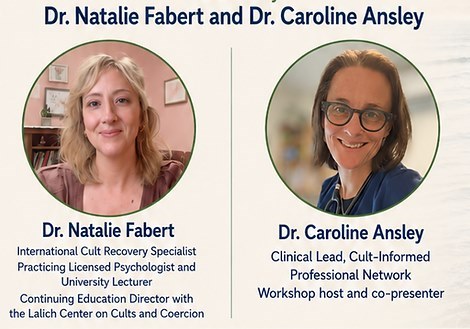
A Full-Day Cult-Informed Practice Workshop with Dr Natalie Fabert and Dr Caroline Ansley
*Special thanks to Kelly Shaw for being the driving force to bring this to the Coast.
Date: 21 October 2026
Time: 9am to 4pm
Venue: Tai Poutini Polytechnic - Campbell Building (Upstairs), Greymouth
Cost: $150 per person, including GST - this includes lunch, morning tea and afternoon tea.
A rare professional development opportunity for West Coast professionals
Family Start West Coast/Buller is pleased to confirm that we will be hosting a full-day professional workshop with internationally recognised cult-informed practitioners and educators Dr Natalie Fabert and Dr Caroline Ansley.
This specialist workshop is designed for professionals who want to improve their understanding of cults, high-control groups and group-based coercive control.
Whether you work in health, mental health, social services, counselling, education, family violence, safeguarding, law, community support or another helping profession, this workshop will strengthen your ability to recognise the effects of coercive control and respond in a safe, informed and effective way.
Why cult-informed practice matters
People who are currently involved in, or who have left, high-control and coercively controlling groups may experience complex and long-lasting effects.
These can include:
- Trauma and psychological distress
- Difficulties with identity, autonomy and decision-making
- Disrupted education and employment
- Financial abuse or dependency
- Challenges establishing relationships and community connections
- Family separation, grief and loss
- Fear, shame, isolation and uncertainty
- Difficulty recognising the coercion or harm they have experienced
The effects of group coercive control can be misunderstood or overlooked when professionals have not received specialist training.
A well-intentioned helping response may be ineffective—or may unintentionally recreate feelings of control, powerlessness or not being believed—when the practitioner does not understand the dynamics of the group environment.
Cult-informed practice gives professionals the knowledge and practical frameworks needed to look beyond the presenting issue, understand the wider context and support each person without judgement or coercion.
What the workshop will cover
This comprehensive full-day workshop will help participants develop a deeper understanding of cults, high-control groups and coercive control in a group context.
Topics are expected to include:
- How cultic and high-control environments operate
- The mechanisms and dynamics of group coercive control
- Recognising possible indicators of involvement in a high-control group
- Understanding how coercive control can affect identity, autonomy and agency
- Common psychological, relational, social and practical impacts
- Clinical presentations that may be associated with group coercive control
- Considerations for screening, assessment and differential diagnosis
- Trauma-informed and cult-informed approaches to engagement
- Working with people who remain involved in a high-control group
- Supporting people who are leaving or recovering from a high-control environment
- Avoiding practices that may unintentionally replicate coercive dynamics
- Advanced intervention considerations
- Recovery pathways and effective professional collaboration
The workshop will translate specialist psychological and sociological knowledge into practical guidance that professionals can apply within their own roles and services.
Who should attend?
This workshop is suitable for professionals working across:
- Social work and community services
- Psychology, counselling and psychotherapy
- Mental health and addiction services
- Primary and secondary healthcare
- Family violence and sexual violence services
- Child and adult safeguarding
- Education and pastoral care
- Youth services
- Disability and advocacy services
- Legal and justice services
- Government agencies
- Non-government and community organisations
- Clinical leadership, supervision and service management
You do not need to be a clinician to attend. The workshop will be relevant to any professional whose role involves supporting, assessing, advising or making decisions that affect people connected to high-control groups.
Upcoming Conferences
- 2026 PMAANZ Conference 17-19 September - Wellington
- NZNO College of Primary Health Care Nurses Symposium - 9-10th October - Christchurch